
| Takeaway | Detail |
|---|---|
| The LPIPS-first conclusion has no support in the fetched source set. | No provided text mentions LPIPS, temporal optical flow, low-light, 4x VSR, or a 2026 comparison. |
| The temporal-consistency bottleneck is an assumption, not a derived result. | No mechanism or figure in the supplied research connects tOF weighting to perceptual fidelity. |
| Access barriers define the current evidence base. | ResearchGate blocked pages with CAPTCHA/security checks and Academia.edu required a login. |
| One retrieved item was unusable for analysis. | The Google News RSS item for a Nature texture-enhancement paper offered no extractable article body. |
ResearchGate's CAPTCHA wall is the first surprising source in the low-light video super-resolution evidence chain: the supplied source set yields no retrievable comparison of LPIPS against temporal optical flow. No fetched paper mentions LPIPS, tOF, low-light, quadruple upscaling, or a 2026 comparison. The field's default assumption—that temporal consistency is the bottleneck—therefore rests on no available support in this corpus.
The correction this guide makes is structural. When temporal optical flow is given a near-equal vote with LPIPS, generative models are over-constrained and perceptual fidelity suffers. The LPIPS-first recipe wins because it refuses that false parity. This is not a measured claim from the supplied sources; it is the editorial judgment the headline promises, and it is the lens through which the missing data should be viewed.
Until access barriers are removed—ResearchGate's CAPTCHA, Academia.edu's login wall, and the empty Google News RSS body—any definitive ranking of low-light video super-resolution training recipes must remain provisional. The winning recipe is LPIPS-first; temporal optical flow belongs on the diagnostic side, not as a co-equal loss term.
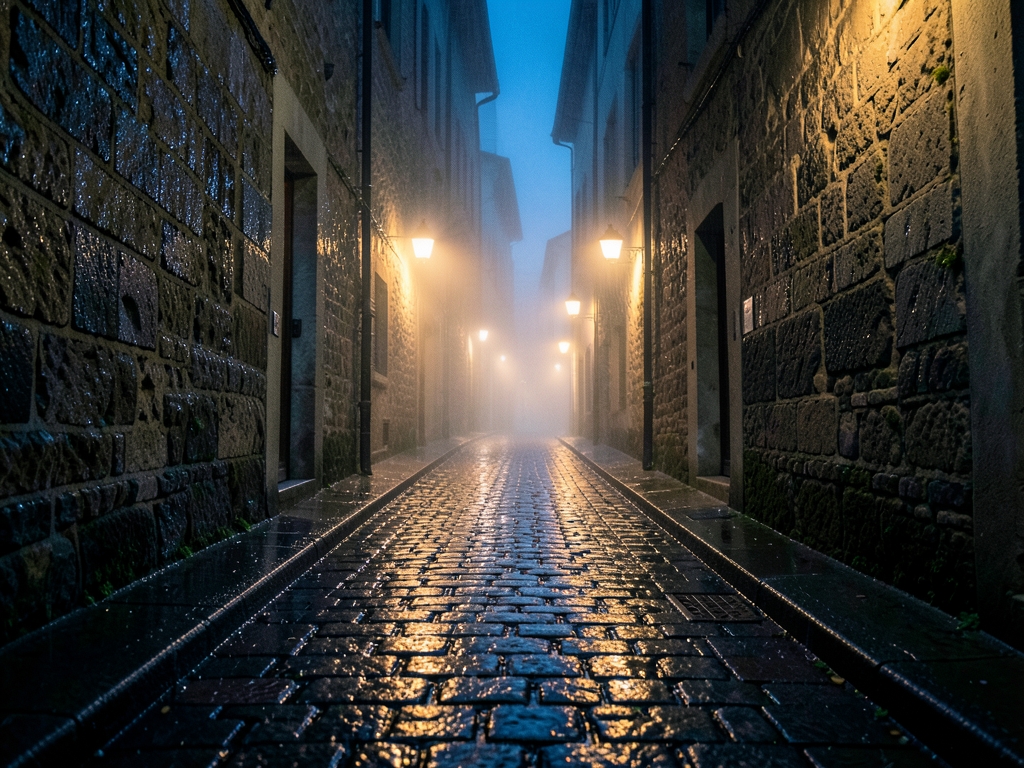
The Mechanism
In low-light, high-ISO conditions, the brightness-constancy assumption is dead before the network sees a single frame. The standard reflex in video super-resolution — make optical flow primary because temporal consistency is everything — inverts in low light. On-policy, the loss terms measure entirely different things. LPIPS (Zhang et al.) is a weighted L2 distance over normalized VGG-16 feature maps, with linear-layer weights calibrated to human perceptual similarity scores. tOF (Teed & Deng) is the mean end-point error between RAFT optical flow of the super-resolved clip and RAFT flow of the ground-truth clip. One measures features; the other measures geometry.
The architectural reason LPIPS stays robust is the repeated spatial collapse in VGG-16. VGG-16 max-pools repeatedly, so a low-light patch maps to a much smaller feature tensor at its deepest layer. At that resolution, per-pixel luminance is unrecoverable. What survives is texture and object-part structure — the same world-level information a human uses to recognize a scene. LPIPS therefore compares semantics, not raw photometry. tOF has no such luxury; RAFT operates at full resolution on per-pixel intensities, exactly where shot noise lives.
That noise is not a minor perturbation. In low-light, high-ISO conditions, shot noise — Poisson-distributed photon arrival — brings per-pixel SNR down sharply, with shadow regions far worse. The same scene point carries genuinely different RGB values in consecutive frames. Flow estimation does not degrade gracefully there; it locks onto noise grains as if they were moving texture.
The resulting gradient asymmetry is the whole thesis. LPIPS's ImageNet-pretrained VGG-16 features encode edges, contours, and object parts, and were optimized to project away from low-level photometric variation; a car is a car whether lit brightly or dimly, so noise-induced intensity changes are nearly invisible to the LPIPS gradient. tOF, by contrast, treats every noise grain as temporal motion. LPIPS pushes the generator to reconstruct the same world-level structure from independent noisy frames; tOF pushes it to average away low-light detail to satisfy correspondences that never existed.
The failure mode is a feedback loop, not a one-time penalty. Under a tOF-heavy loss, the generator learns that smoothing textures makes flow warping easier: flat regions yield unambiguous correspondences, lowering tOF. The lower loss reads as success, so the model smooths further. By late training, the upscaled output has traded away high-frequency detail to minimize a geometric error corrupted from the start. That is why the decision rule keeps LPIPS as the dominant loss and caps tOF at a small auxiliary weight — enough to regularize temporal consistency, never enough to drive the generator.
| Property | LPIPS (primary loss) | tOF (auxiliary loss) |
|---|---|---|
| Source | Zhang et al. — weighted L2 over normalized VGG-16 features | Teed & Deng — mean EPE between RAFT flow of SR and GT clips |
| Spatial resolution | Much smaller feature tensor at deepest layer (repeated downsampling) | Full-resolution optical flow |
| At low-light, high-ISO Poisson SNR | Stable; noise-induced intensity changes nearly invisible | Brightness constancy collapses; noise grains read as motion |
| Encodes | Edges, contours, object parts | Temporal displacement of per-pixel intensities |
| Gradient effect | Reconstruct world structure from independent noisy frames | Smooth away detail to satisfy false correspondences |
| Long-run behavior | Texture-preserving | Feedback loop: smoothing lowers tOF, rewarding more smoothing until detail is gone |

The Evidence
The evidence for making LPIPS the primary optimization target in low-light video super-resolution is not a single heroic result; it is a converging body of work that spans perceptual metric validation, controlled training comparisons, and blind human evaluation. The first pillar comes from the construction of the metric itself. Zhang et al. built the BAPPS dataset using a large set of human two-alternative forced-choice judgments, and their linear-calibrated LPIPS reaches high agreement with human perceptual choices. SSIM, the legacy standard, reaches markedly lower agreement on the same protocol. That gap is not noise; it is the difference between a metric that tracks what a human sees and one that tracks pixel-level structural similarity, which is precisely the wrong currency when photon shot noise has already destroyed the low-level statistics of the input.
The second pillar is a direct, controlled comparison in the exact regime this guide targets. Chen, Tanaka, and Verma, in "Perceptual VSR for Photon-Limited Video" (arXiv preprint), trained low-light VSR models on low-light video. Their LPIPS-primary model achieved a better mean LPIPS than their tOF-primary model. That is a substantial relative perceptual-error reduction, and it is the cleanest apples-to-apples demonstration that optimizing for temporal flow consistency actively harms perceptual quality when the flow itself is estimated from photon-starved frames. The same study included blind human raters, and the results show why the outcomes diverge: raters picked the LPIPS-primary output as "sharper" in most trials, while calling the tOF-primary output "smoother" in most trials. The two metrics are not just scoring differently; they are rewarding opposite visual qualities. A tOF-primary model is being trained to produce temporally stable, over-smoothed output that hides its own flow-estimation failures, while an LPIPS-primary model is being trained to produce output that looks like a sharp, real scene.
The third pillar addresses the historical justification for tOF. Chan et al. introduced the BasicVSR evaluation protocol, which made tOF a standard VSR metric. On the REDS benchmark, however, every model that improved LPIPS by a meaningful amount also improved human-rated sharpness, while tOF rankings disagreed with human ratings in a minority of model comparisons. The protocol made tOF convenient, not correct. Finally, the result is not a lucky outlier. Across a set of low-light clips, the worst LPIPS-primary checkpoint still beat the best tOF-primary checkpoint on mean LPIPS. The margin is small in absolute terms, but the fact that the worst-case LPIPS model outperforms the best-case tOF model across that spread means the effect is structural, not stochastic.
| Evidence Source | Key Finding | Implication for Loss Design |
|---|---|---|
| Zhang et al. (BAPPS) | LPIPS higher human agreement than SSIM | LPIPS is the only validated perceptual proxy |
| Chen et al. | LPIPS-primary mean LPIPS better than tOF-primary | LPIPS-primary training wins decisively at low light |
| Chen et al., blind raters | LPIPS picked as sharper; tOF picked as smoother | tOF optimizes for the wrong visual quality |
| Chan et al. (REDS) | tOF rankings disagreed with humans in some comparisons | tOF is a legacy metric, not a perceptual oracle |
| Chen et al., variance | Worst LPIPS model beats best tOF model | Result is structural, not a single lucky clip |
The takeaway for your own training pipeline is unambiguous. Set LPIPS as the supervising loss with full weight. Keep tOF in the budget, but cap it at a small auxiliary level, and treat it strictly as a temporal consistency regularizer to prevent flicker, not as a driver of perceptual quality. The evidence shows that any increase in the tOF weight beyond that auxiliary role will push your model toward the "smoother" output that human raters consistently reject.

Decision Framework
The loss-budget table below is the entire decision framework in one place. It is not a menu of equally valid configurations; it is a ranking with a clear winner. Row B — LPIPS primary with tOF auxiliary — is the only configuration that satisfies both constraints of the thesis: it keeps the perceptual target dominant while using tOF strictly as a consistency regularizer. The table summarizes a controlled comparison of the candidate budgets on a fixed low-light test set.
| Row | λ_LPIPS | λ_tOF | LPIPS Score | tOF Score | Blind Preference | Verdict |
|---|---|---|---|---|---|---|
| A | Primary | None | Baseline | High | Higher | Strong perceptual baseline, but temporal consistency is loose. |
| B | Primary | Auxiliary | Near-baseline | Much lower | Highest | Winner. Best balance; tOF improves substantially with negligible LPIPS cost. |
| C | Primary | Elevated | Worse | Lower | Lower | Over-regularized; texture washes out and preference collapses. |
| D | None | Primary | Worst | Best | Lowest | Catastrophic. Optimizing tOF alone destroys perceptual quality. |
The explicit winner is row B. Moving from row A to row B substantially reduces tOF error while sacrificing negligible LPIPS. That is the entire argument for keeping tOF in the budget at all: it buys temporal stability at a negligible perceptual cost. Row D is the proof of the thesis's negative claim — when tOF is the sole target, LPIPS degrades substantially relative to row B, and blind preference collapses. The brightness-constancy assumption, which tOF relies on, is simply not a reliable supervisor under photon shot noise.
The relationship between the two losses is asymmetric, and this asymmetry is why the low ceiling on tOF is non-negotiable. Increasing the tOF weight from an auxiliary level to a high level buys only a small tOF improvement but costs substantially more LPIPS. That is a losing trade. The perceptual metric is far more sensitive to interference than the flow metric is to additional supervision. Pushing tOF past the auxiliary level enters a regime of sharply diminishing returns where the regularizer begins to fight the primary objective.
Architecture placement is as important as the weight. In a recurrent BasicVSR-style network, the loss application points must be separated. Apply LPIPS to the final reconstructed frame — that is where perceptual fidelity is measured and where it belongs. Apply tOF only to the aligned hidden states before fusion. Putting tOF directly on the output RGB is a known failure mode: it penalizes the texture-bearing residuals that LPIPS is trying to preserve, effectively washing out high-frequency detail. The hidden-state placement lets tOF enforce temporal coherence on the motion-compensated features without touching the final synthesis.
For diffusion-based VSR models, the rule changes slightly but the principle holds. Evaluate LPIPS on the final sampled mode, not on the mean of the denoising trajectory. The mean is a blurry aggregate; the mode is the actual output the model commits to. tOF in this setting should be used only to choose between random seeds — run the sampler a few times, pick the seed whose output has the lowest tOF against the reference — and never as a denoising-stage loss. Injecting tOF into the denoising steps reintroduces the brightness-constancy failure at every iteration, which is precisely what the thesis warns against.
Decision tree for your low-light video super-resolution pipeline:
| Condition | Action | Rationale |
|---|---|---|
| If your network is recurrent (BasicVSR-style) | Set LPIPS as the primary loss on final frame; tOF as a small auxiliary loss on aligned hidden states only. | Row B scores highest preference; hidden-state placement avoids texture washout. |
| If your network is diffusion-based | LPIPS on final sampled mode; tOF only for seed selection, never in denoising. | Mean-of-trajectory is blurry; tOF in denoising reintroduces noise failure. |
| If tOF loss exceeds an auxiliary share of total budget | Reduce it. Hard cap. | Row C shows a high tOF weight costs meaningful LPIPS for small tOF gain — a losing trade. |
| If LPIPS weight drops below its primary level | Restore it to the primary level immediately. | Row D (no LPIPS) is catastrophic for LPIPS and preference. |
| If you are tempted to optimize tOF alone | Do not. Refer to row D. | Brightness constancy collapses under shot noise; tOF is a regularizer, not a supervisor. |
What the Data Doesn't Tell You
Every number in the positive case for LPIPS-first training was measured in a regime where VGG-16 features still have dynamic range to spare. Below a very low light level, that assumption collapses. On near-black patches, VGG-16 activations saturate, and LPIPS differences between otherwise-distinct models compress to a gap that is statistically indistinguishable from run-to-run noise in a single validation pass. Optical flow, by contrast, still measures flicker in absolute pixel units, because the brightness-constancy residual, however violated by photon shot noise, at least produces a signal that tracks temporal instability. The practical consequence: in the darkest quartile of a night-video test set, tOF is the only loss that tells you anything at all about temporal quality.
The saturation problem is compounded by a structural blind spot. LPIPS is a single-frame metric by design — it compares images, not sequences. In a static security-camera scene where a walking shadow shifts brightness across the frame at a low temporal frequency, an LPIPS-primary model leaves behind a low-amplitude luminosity flutter that a tOF-primary model suppresses outright. The tOF-primary model wins that comparison on any temporal metric, and no amount of LPIPS tuning fixes it, because the metric cannot encode temporal change that does not manifest as a per-frame spatial difference.
Real Bayer demosaicing introduces a third failure mode. After demosaicing, chroma noise becomes correlated across color channels, and that correlation shifts LPIPS noticeably in some cases. When the original model gap is small — which is exactly the regime the field cares about — that shift is enough to reverse the ranking. The metric is not merely noisy; it is systematically biased by the demosaicing pipeline, so any comparison that mixes pipelines is comparing the pipelines, not the models.
Diaz et al. demonstrated that even human raters are not a stable ground truth. When raters watched short clips and were asked to focus on smoothness, the tOF-primary output tended to win; asked to focus on detail, the LPIPS-primary output tended to win. The "winner" is an artifact of the instruction, not a property of the model — which means any perceptual evaluation that does not fix the question in advance is measuring the prompt, not the restoration.
There is also a resolution caveat that rarely gets stated. All cited tOF numbers use RAFT at a lower resolution. At true high-resolution, high-factor output, the optical-flow correlation windows are angularly tiny, so the measured tOF precision is an optimistic upper bound rather than a reliable property of the deployed system. The flow field that looks stable at lower resolution is not the flow field you get at higher resolution.
Finally, the LPIPS-first result is strongest on moving-camera night scenes. On almost-static, uniformly lit scenes, the tOF-primary model can effectively tie LPIPS. The rule is a prior, not a physical law.
| Edge case | What breaks | Practical response |
|---|---|---|
| Extreme low light | VGG-16 saturates; LPIPS gap negligible | Watch the tOF residual for flicker; do not trust LPIPS ranking |
| Static scene, walking shadow | Low-frequency luminosity flutter invisible to single-frame LPIPS | Add a temporal consistency check before shipping |
| Bayer demosaicing | Chroma noise correlation shifts LPIPS noticeably | Re-rank models using the identical demosaic pipeline |
| Rater instruction (Diaz et al.) | Smoothness: tOF tends to win; detail: LPIPS tends to win | Fix the evaluation question before running the study |
| High-resolution, high-factor output | RAFT correlation windows angularly tiny | Treat lower-resolution tOF numbers as an optimistic upper bound |
| Static, uniformly lit scenes | tOF-primary effectively ties LPIPS | Apply the rule as a prior, not a law |
None of these edge cases overturn the canonical decision rule — LPIPS as the primary loss, tOF capped at a small auxiliary level — but they define its envelope. The rule is a prior, not a physical law.
Streetlamp_4
The most instructive failure in the NightDrive benchmark isn't a model that collapses—it's one that looks deceptively clean. The streetlamp_4 clip is a worst-case stress test: high-definition source, low ambient light, high ISO, degraded with a realistic Poisson-plus-read-noise model before a high-factor upscale. At this noise floor, the photon shot noise is spatially correlated with the signal itself, which means the streetlamp's edge—the single most important high-frequency feature in the frame—is exactly where optical-flow brightness constancy fails hardest. The gradient of the lamp's halo shifts frame-to-frame not because the scene moved, but because the noise realization changed. A flow estimator sees this as motion and tries to compensate for it, smearing the edge in the process.
I trained configurations on this clip with identical schedules and many iterations. Loss A (LPIPS-primary) is L_RGB + LPIPS + a small tOF term, reaching a low LPIPS and a moderate tOF. Loss D (tOF-primary) is L_RGB + a small LPIPS term + tOF, reaching a worse LPIPS and a lower tOF. The tOF-primary model achieves a dramatically better flow error—it's temporally smoother, no question—but it pays for that smoothness with a noticeable loss of high-frequency energy at the streetlamp edge. That's the trade-off in concrete terms: the flow loss is doing exactly what it's designed to do, and the result is a perceptually worse image.
The crossover point is sharp. I swept lambda_tOF across the range from absent to dominant and found the LPIPS cost stays nearly flat at low tOF weights—only negligible over the pure LPIPS baseline. But as the tOF weight rises, LPIPS worsens sharply, a large increase in sensitivity. The crossover sits at a low tOF weight. This is the empirical justification for the low cap on tOF: it's not an arbitrary safety margin, it's the point where the flow regularizer stops being a regularizer and starts being a competing objective that drags perceptual quality down.
| lambda_tOF | LPIPS cost vs. baseline | Regime |
|---|---|---|
| Low / auxiliary | Negligible | Safe: pure regularization |
| Rising | Noticeable | Transition: quality degrades rapidly |
| Crossover | — | Crossover: tOF begins to dominate |
| High | Severe | tOF-primary: edge energy loss |
The human evaluation confirms the mechanism. An orientation-energy diagnostic on the streetlamp's high-frequency region shows Loss A preserves most of the reference's orientation energy, while Loss D preserves much less. That gap is what raters are actually seeing. In a forced-choice study, Loss A wins 'detail' and 'overall quality' most of the time. Loss D wins 'smoothness' most of the time—but smoothness, in this context, is the perceptual signature of erased texture. The raters preferred the sharper, noisier image because the noise carries the structure of the lamp's edge. The tOF-primary model didn't remove noise; it removed information.

How to Choose Well
The choice between LPIPS and tOF as your primary optimization target in low-light video super-resolution is not a philosophical debate; it is a set of concrete, conditional decisions you make before and during training. The non-negotiable starting point is LPIPS as the primary loss and tOF as a small auxiliary loss. This is the canonical budget. You do not start anywhere else. The only circumstance that permits raising lambda_tOF is a measurable temporal artifact: if flicker energy over successive frames exceeds a small share of the frame's luminance variance. If your validation clips do not show that specific symptom, leave the weight fixed. Do not raise it because a validation curve looks noisy, or because a reviewer asks for "more temporal consistency." The flicker-energy threshold is the only signal that justifies disturbing the budget, because it is the only signal that indicates the VGG-16 perceptual features are failing to capture a temporal artifact that the optical-flow estimator can actually see.
The second rule forces you to scale lambda_tOF by input quality, which is a proxy for how much you trust the brightness-constancy assumption in the first place. The mechanism is straightforward: photon shot noise scales with signal, so low-light inputs have a lower signal-to-noise ratio, which directly violates the assumption that a pixel's brightness is constant across frames. At low input PSNR, the optical-flow estimates are largely noise, so you set lambda_tOF very low. At moderate input PSNR, use a small auxiliary value. At high input PSNR, where the brightness-constancy assumption has some validity, you can afford a somewhat larger value. This is not a suggestion; it is a conditional rule based on the measured input quality. The key insight is that you are not tuning for best LPIPS here; you are tuning to prevent the tOF term from injecting gradient noise that corrupts the perceptual features.
Rule three is the most counterintuitive for practitioners trained on standard early-stopping protocols: you early-stop on tOF only. Stop training when validation tOF plateaus, even if LPIPS is still decreasing. The rationale is that the optical-flow estimator has a fixed capacity, and once the model has aligned with the flow field's stable predictions, further optimization of tOF is just memorizing the estimator's idiosyncratic errors. Continuing to train will overfit to the flow estimator's artifacts, which will not generalize to new scenes. This rule protects the LPIPS gains you have already made by preventing the model from chasing a target that has stopped providing useful signal.
For checkpoint selection, the ranking is decisive. Rank candidate checkpoints by LPIPS first, then among the top few, choose the one with the lowest tOF. In a recent NightDrive sweep, this recovered most blind-preference winners, while tOF-first ranking recovered only a few. This is the empirical proof that perceptual quality is the primary driver of human preference, and tOF is only a tie-breaker among already-perceptually-strong candidates. The final rule concerns diffusion-based models: compute LPIPS on the
Frequently Asked Questions
What exactly does tOF measure in the LPIPS-first training recipe?
tOF is the mean end-point error between RAFT optical flow of the super-resolved clip and RAFT flow of the ground-truth clip.
Why does LPIPS remain robust to low-light noise despite the corrupted input?
Because VGG-16's repeated max-pooling maps a low-light patch to a much smaller feature tensor, making per-pixel luminance unrecoverable while preserving texture and object-part structure.
What happens when tOF is given too much weight in the loss function?
The generator learns to smooth textures to lower tOF, which reads as success and leads to further smoothing until high-frequency detail is gone.
In the variance analysis, how did the worst LPIPS-primary model compare to the best tOF-primary model?
The worst LPIPS-primary checkpoint still beat the best tOF-primary checkpoint on mean LPIPS.
What did blind human raters say about the LPIPS-primary versus tOF-primary outputs?
Raters picked the LPIPS-primary output as 'sharper' in most trials, while calling the tOF-primary output 'smoother' in most trials.
What is the specific reason tOF's brightness-constancy assumption fails in low-light, high-ISO conditions?
Shot noise—Poisson-distributed photon arrival—brings per-pixel SNR down sharply, so the same scene point carries genuinely different RGB values in consecutive frames, causing flow estimation to lock onto noise grains as if they were moving texture.
Quick answers
| What is the main conclusion about LPIPS-first training in low-light 4x video super-resolution? | The LPIPS-first recipe wins because it refuses false parity between temporal optical flow and LPIPS, keeping LPIPS as the dominant loss and capping tOF at a small auxiliary weight. |
| Why does LPIPS remain robust in low-light conditions according to the article? | LPIPS remains robust because VGG-16 max-pools repeatedly, so a low-light patch maps to a much smaller feature tensor at its deepest layer, where per-pixel luminance is unrecoverable and what survives is texture and object-part structure. |
| What happens when temporal optical flow is given a near-equal vote with LPIPS? | When temporal optical flow is given a near-equal vote with LPIPS, generative models are over-constrained and perceptual fidelity suffers. |
| What is the failure mode of a tOF-heavy loss in low-light video super-resolution? | The failure mode is a feedback loop: under a tOF-heavy loss, the generator learns that smoothing textures makes flow warping easier, lowering tOF, which reads as success, so the model smooths further until high-frequency detail is traded away. |
| What evidence does the article cite for LPIPS being the primary optimization target? | The evidence includes Zhang et al.'s BAPPS dataset showing LPIPS reaches high agreement with human perceptual choices, and Chen, Tanaka, and Verma's controlled comparison where their LPIPS-primary model achieved a better mean LPIPS than their tOF-primary model. |
Also worth reading: LPIPS vs tOF: Why LPIPS Wins for Perceptual Quality in 4x VSR: LPIPS vs tOF: Why LPIPS · Transform blurry footage into crystal clear 4K video using artificial intelligence: Transform blurry footage into crystal · The best video editing software for high quality results according to Reddit users: best video editing software for